Epicanthoplasty comes up often in double-eyelid consultations.
"Add a little epicanthoplasty and your eyes will look so much more open."
But from the explanation alone, it's hard to picture what epicanthoplasty actually changes. Does the eye get bigger? Longer? Do the eyes move closer together? It's easy to lose track.
Epicanthoplasty opens what was covered
At the inner corner of the eye sits a fold of skin called the epicanthal fold. In some people, this fold covers the front end of the eye.
Epicanthoplasty opens up that covered portion. Rather than enlarging the eye itself, it is closer to revealing the front part of the eye that was already there.
How we compared: the crease was fixed on both versions
Apply epicanthoplasty on its own and the difference can be too small to judge by eye. In real consultations, too, it is usually considered together with a double-eyelid crease rather than alone.
So the setup was this:
- Crease only: an in-line double eyelid, no epicanthoplasty
- Crease + epicanthoplasty: the same in-line crease with epicanthoplasty added
Both results carry the identical crease, so the only difference between the two images is the epicanthoplasty.
What epicanthoplasty changed was the eye's length
Put the two images side by side and the change sits in a different place.
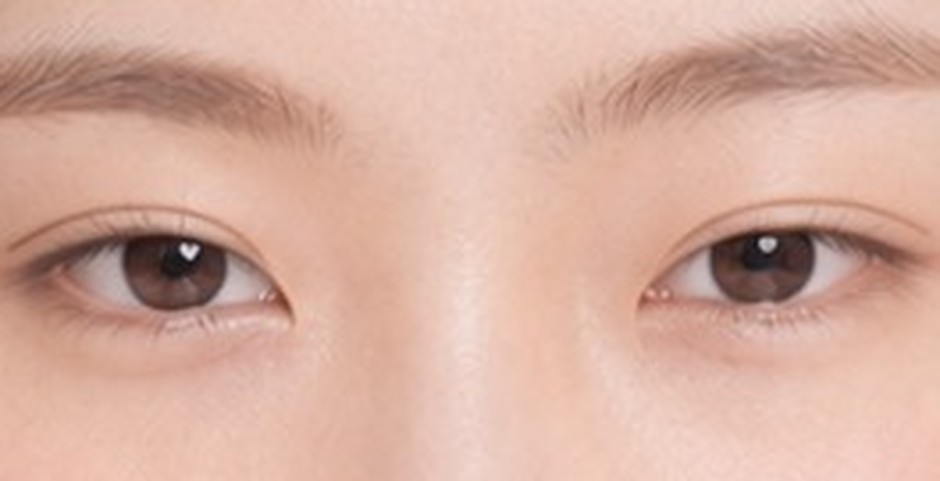
With the crease alone, a line forms on the lid and the eye opens a little wider. But the inner corner stays covered, so the eye still appears to end short on the inner side.
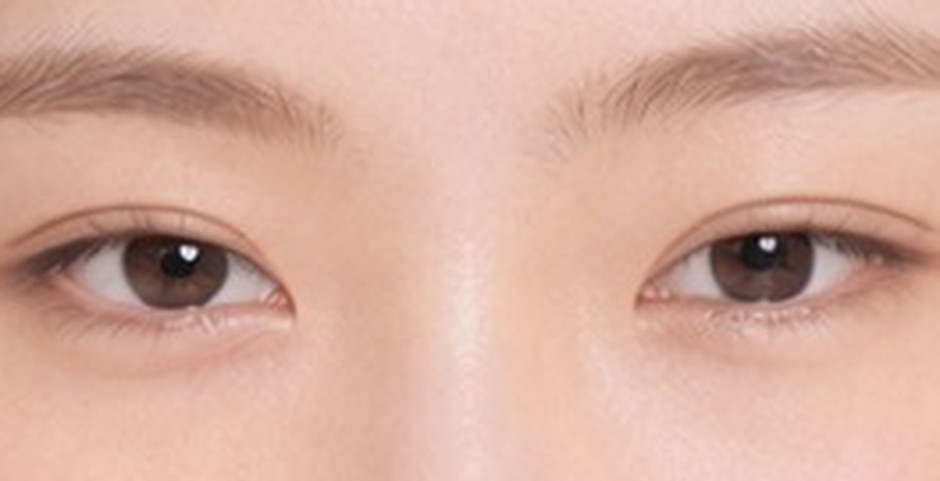
Add the epicanthoplasty and the covered inner corner opens. The eye doesn't grow vertically; it gets longer toward the front. As a result, the two eyes also look slightly closer together.
People often say epicanthoplasty makes only a small difference. On this face, that wasn't the case. The change from epicanthoplasty alone may be small, but added on top of a crease, it changes the overall length of the eye.
Seen on the whole face
Crease only
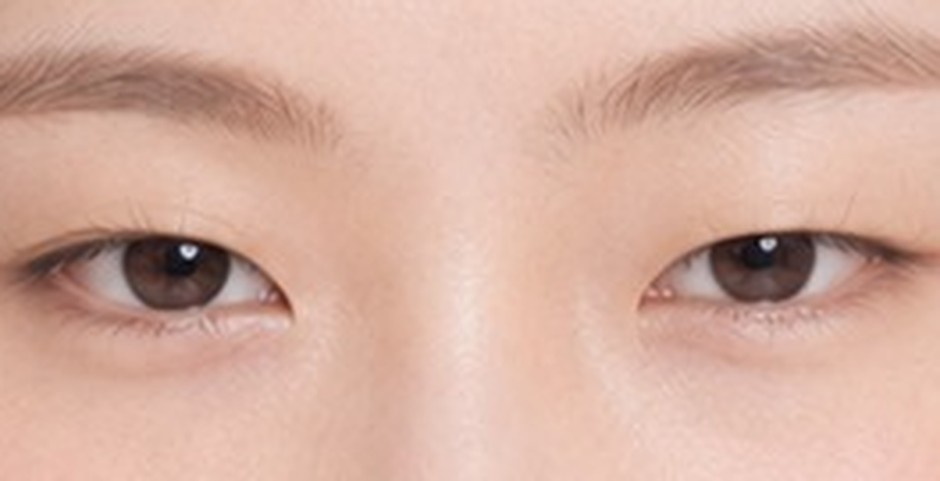
 Original
Original — Before.
Crease only
The eyes look more defined, but the spacing between them is unchanged. With the inner corners still covered, the eyes appear to end short on the inner side.
Crease + epicanthoplasty
Original
Original — Before.
Crease + epicanthoplasty
The eyes lengthen toward the front and the space between them looks narrower. The center of the face reads as slightly more gathered, too.
Not bigger, but closer together
In this comparison, epicanthoplasty did not increase the eye's vertical height. What changed was the front end of the eye, and in the photos it showed up as:
- The eyes look longer toward the front
- The space between the eyes looks narrower
- The opened inner corners make the expression sharper
Which means that if your eyes are already close-set, the difference may be small, or an aggressive version may make the face look cramped. Conversely, wide-set eyes with a thick epicanthal fold tend to show a larger difference.
Before you decide
Epicanthoplasty opens skin that used to be covered, which makes it relatively hard to reverse.
- If your epicanthal fold is shallow to begin with, there is little to gain
- If your eyes are naturally close-set, overdoing it can make the face look cramped
- Epicanthoplasty scars sit in a spot that is tricky to conceal
The result above is one specific combination: an in-line crease plus epicanthoplasty. The same procedure reads quite differently depending on how far the corner is opened, so it's worth comparing across intensities as well.